
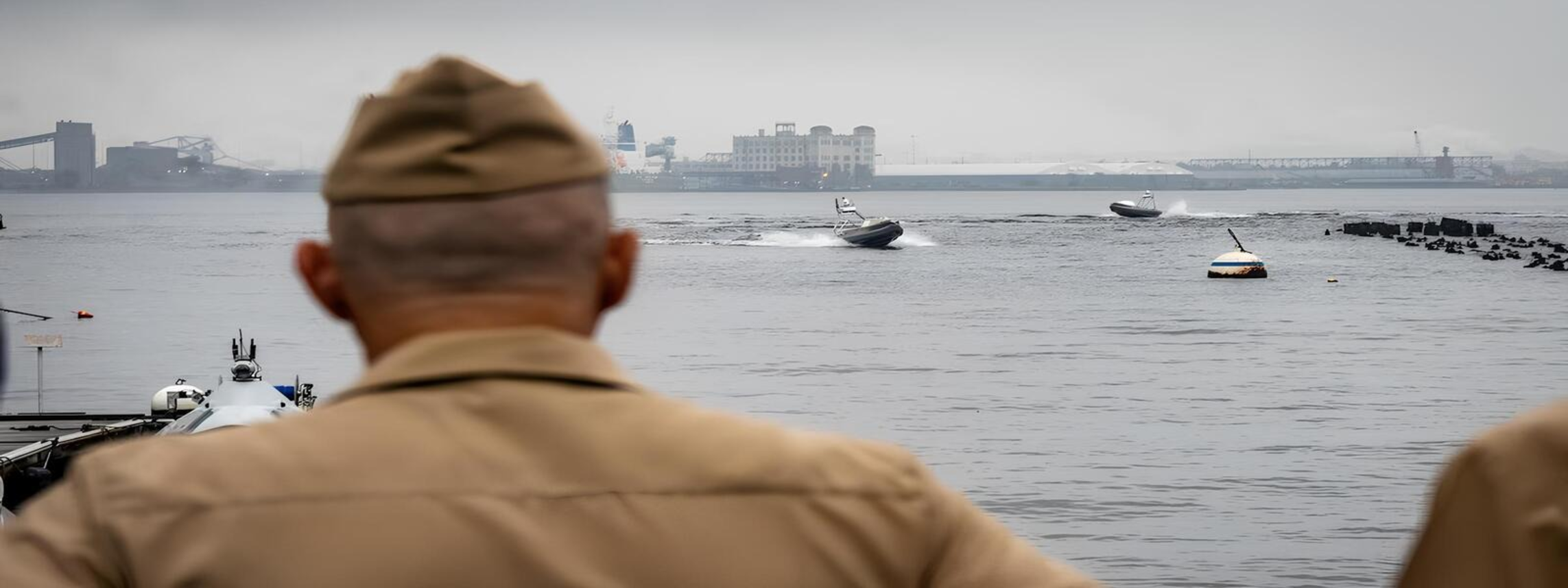
The US Navy is building a drone fleet to take on China. It's not going well.
Recent U.S. Navy tests of autonomous maritime drones have been marred by technical failures and accidents, including a collision between two vessels from rival firms Saronic and BlackSea Technologies and a separate incident in which a support boat capsized, throwing its captain into the water. These mishaps, attributed to software glitches and human error, highlight the challenges facing the Pentagon’s ambitious push to build swarming fleets of fully autonomous naval drones—seen as crucial for countering threats such as China in the Taiwan Strait. The setbacks come amid leadership turmoil, program reviews, and a paused $20 million contract with L3Harris, raising doubts about cost-effectiveness and oversight in the Navy’s drone program, even as companies like BlackSea and Saronic rapidly expand production under multi-million-dollar investments. Despite these issues, the Pentagon remains committed to its broader $1 billion Replicator initiative to field thousands of drones, underscoring both the promise and the growing pains of integrating autonomy into naval warfare.