
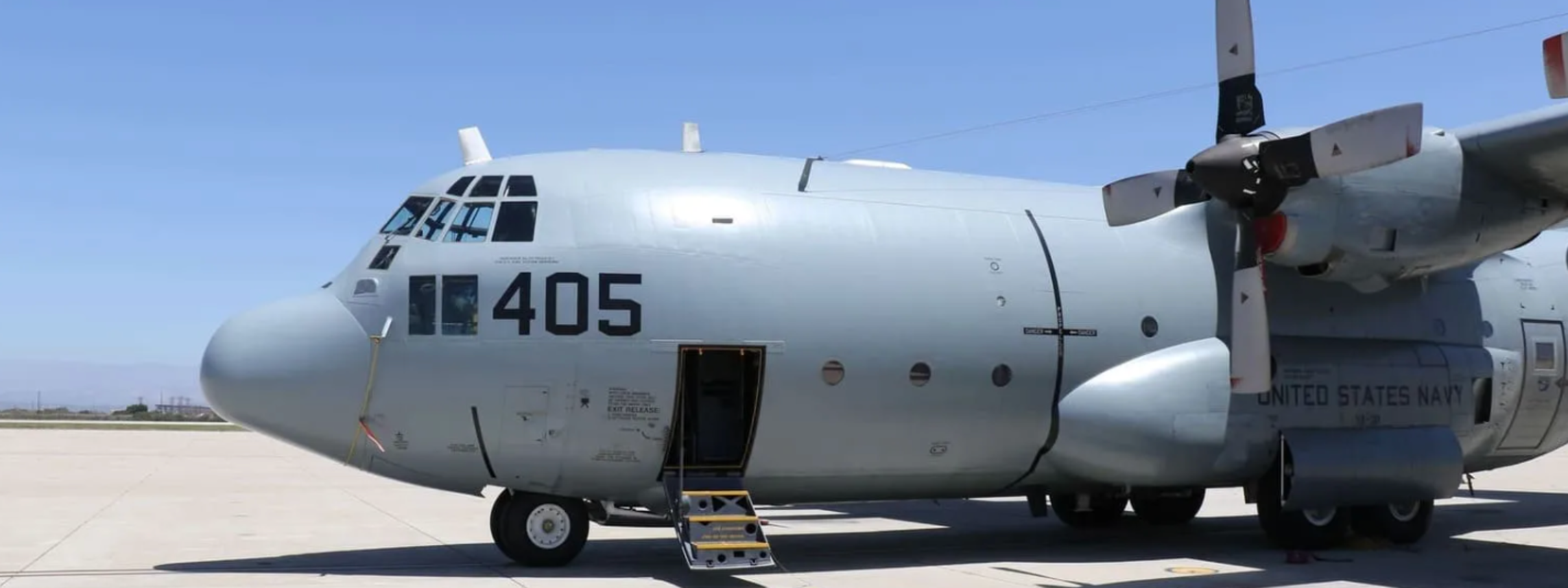
A U.S Navy KC-130T Hercules simulated being an SM-6 missile during the Talisman Sabre 2025 exercise
During the Talisman Sabre 25 exercises, hosted by Australia alongside Papua New Guinea, the U.S Army had the opportunity to launch one of its SM-6 missiles to evaluate its performance from one of its Typhon systems. Prior to that, in order to calibrate telemetry, communication, and ground-based tracking systems, the U.S Navy conducted a flight with one of its KC-130T Hercules aircraft from Air Test and Evaluation Squadron (VX) 30, simulating the missile.
Commenting on this unusual event, Nathan Stock, platform coordinator for VX 30, summed it up by saying: “We turned the aircraft into a fake missile. They tracked us the same way they would track the real missile.” According to official channels, the aircraft’s flight was key to enabling, just a few days later, the launch of the SM-6 missile against a maritime target under the coordination of the Army’s 3rd Multidomain Task Force — marking the first use of the Typhon system outside US territory.
The occasion also allowed the US Navy to test the Satellite Communications Range Extension Aircraft Modification system (also known as SCREAM), which was introduced in 2024. Thanks to its proper integration with the KC-130T aircraft, the mission was able to overcome the challenge posed by the limited range of Australian tracking and communications infrastructure, providing Army units with a real-time data link to validate the simulated missile’s flight path. This was made possible by the system’s ability to connect to the Starlink network, leveraging the aircraft’s own power and onboard GPS systems.
In the words of Captain David Halpern, commodore of the Pacific Naval Test Wing, “SCREAM proved its worth in a real-world environment. It gave the Army a direct link to its surrogate missile over terrain that would otherwise have been out of reach. That’s the kind of flexible capability we need in contested environments.” This is no minor point, considering that the new missile launchers will be deployed throughout the Indo-Pacific in areas not always well-prepared for such operations, as part of the containment strategy the US has outlined with a focus on China.