
Analysis: China’s Strategy to Undermine the US Undersea Surveillance Network.
According to an article published on August 13, 2025, by Defense News, citing an essay by Ryan Martinson for the Center for International Maritime Security, some officers of the People’s Liberation Army Navy (PLAN) recommend a strategy aimed directly at the United States undersea surveillance network, which is considered a major threat to China’s submarine fleet. Martinson, a professor at the China Maritime Studies Institute at the U.S. Naval War College, reports that Chinese experts view this system as vulnerable due to the vast maritime area to be monitored in the Western Pacific. According to these experts, disabling enough sensors could paralyze the entire system and significantly reduce its effectiveness.
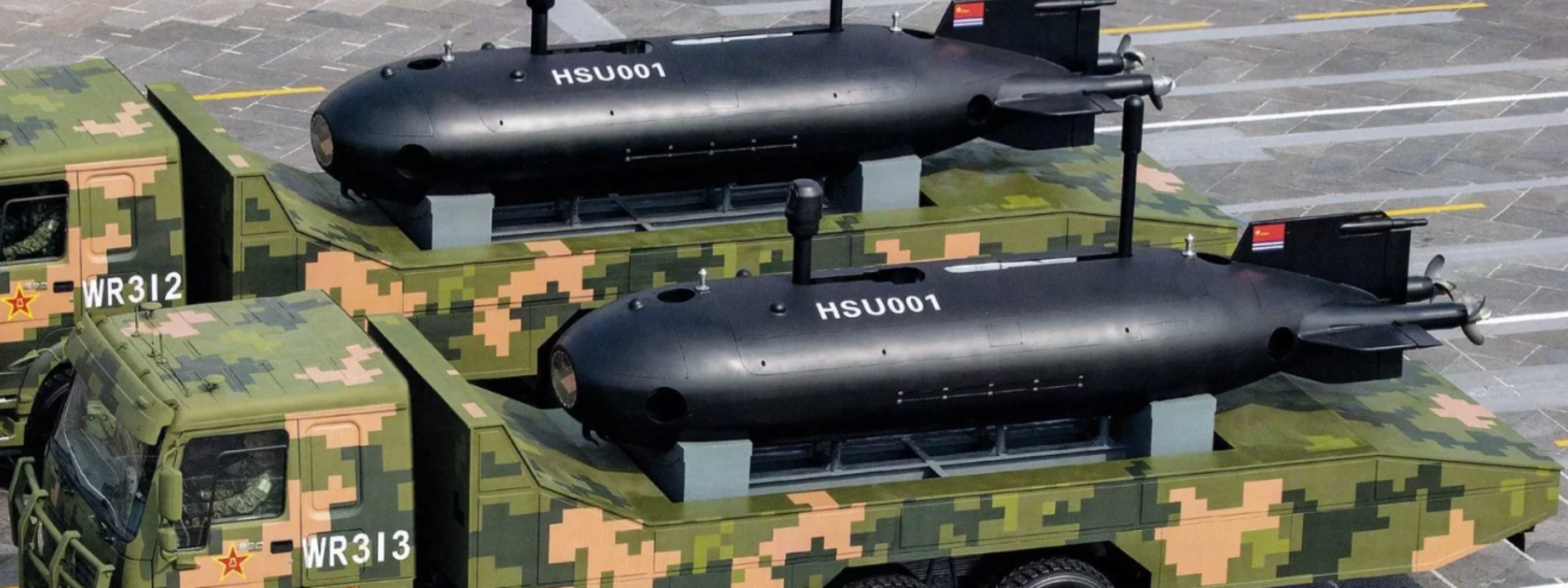
o understand this concern, it is necessary to outline the structure of the U.S. undersea surveillance network, and the technical means China already possesses or seeks to develop, whether coercive or non-coercive but dual-use, that is, applicable for military purposes.
The U.S. system is built on an integrated architecture combining fixed sensors, mobile systems, and airborne platforms. At its core is the Integrated Undersea Surveillance System (IUSS), a successor to the Cold War-era SOSUS network, consisting of arrays of seabed acoustic sensors connected to shore by undersea cables. This fixed network continuously monitors strategic areas, particularly maritime choke points and likely submarine transit routes. Complementing it are towed-array systems such as the Surveillance Towed Array Sensor System (SURTASS), deployed on specialized ships such as the Victorious and Impeccable classes. These are capable of using passive or low-frequency active sonar to detect submarines over long distances, even in complex acoustic environments. U.S. destroyers, frigates, and attack submarines add capability with hull-mounted sonars and towed arrays, while airborne assets, the P-8A Poseidon and MH-60R Seahawk, deploy sonobuoys, dipping sonars, and torpedoes. The network is further supported by satellites, unmanned undersea vehicles, and oceanographic research ships, which gather environmental data critical to optimizing detection.