
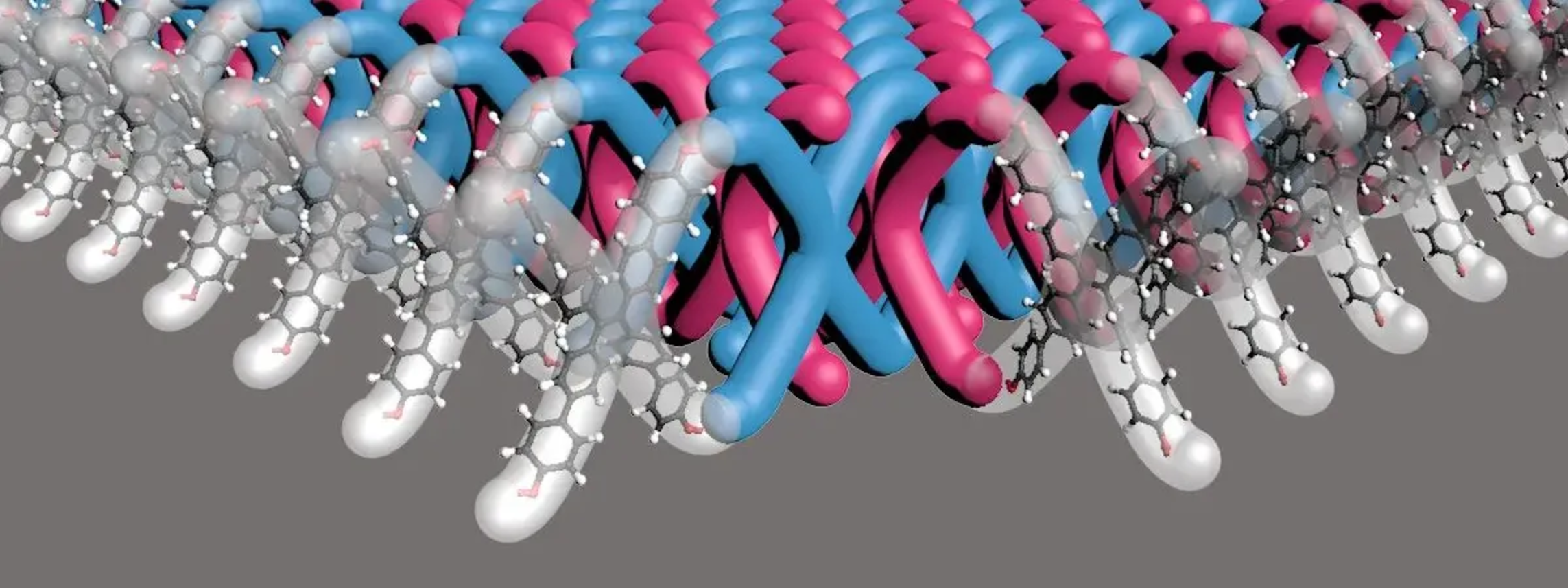
Chainmail-like polymer could be the future of body armor
Researchers supported by grants and instrumentation provided by the U.S. National Science Foundation have created the first 2D polymer material that mechanically interlocks, much like chainmail, and used an advanced imaging technique to show its microscopic details. The material combines exceptional strength and flexibility and could be developed into high-performance and lightweight body armor that moves fluidly with the body as it protects it.
The nanoscale material was developed by researchers at Northwestern University and the electron microscopy was conducted at Cornell University. The results are published in a paper in Science.
Groundbreaking in more ways than one, the paper describes a highly efficient and scalable polymerization process that could potentially yield high volumes of this material at mass scale. In addition to being the first 2D mechanically interlocked polymer, it also contains 100 trillion mechanical bonds per 1 square centimeter — the highest density of mechanical bonds ever achieved in a material.
"We made a completely new polymer structure," says William Dichtel, a researcher at Northwestern University and one of the study's authors. "It's similar to chainmail in that it cannot easily rip because each of the mechanical bonds has a bit of freedom to slide around. If you pull it, it can dissipate the applied force in multiple directions."