
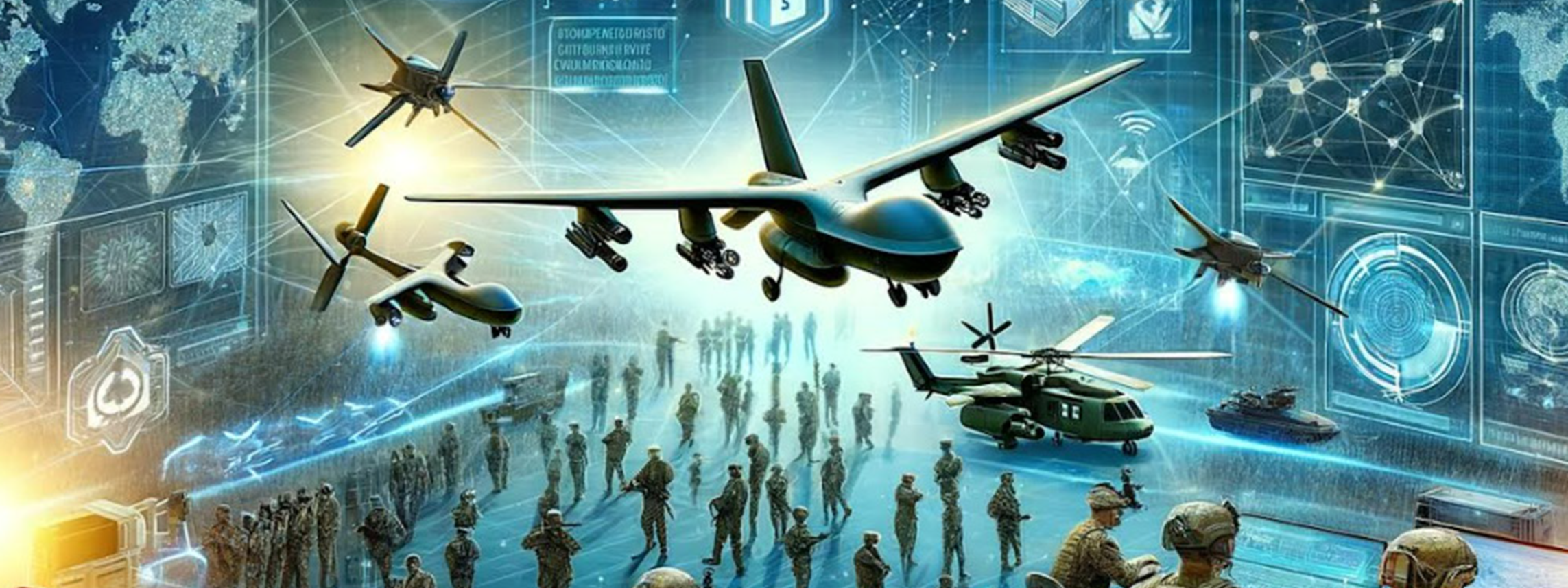
Atlantic Council Commission on Software-Defined Warfare: Final report
A profoundly transformed global security environment presents the United States with its most significant geopolitical and geoeconomic challenges since the Cold War—and perhaps since World War II. China, Russia, Iran, and North Korea—together a new “axis of aggressors”—are increasingly collaborating to support their revisionist geopolitical goals and challenge global stability. Meanwhile, US domestic constraints—such as relative-to-inflation flat defense budgets, military recruitment and talent shortfalls, byzantine acquisition processes, and inadequate industrial capacity—severely limit the US ability to adequately deter and address these threats at speed and scale.
During World War II, US industrial strength and manufacturing capacity decisively factored into the Allies’ victory. Today, however, US defense production capacity falls short of potential wartime demands. In contrast, China’s industrial policies, manufacturing prowess, and strategic focus on software-defined technologies—including artificial intelligence (AI), cloud computing, and development, security, and operations (DevSecOps)—have propelled Beijing to rapidly advance its defense capabilities.
Maintaining the Department of Defense (DoD) status quo—anchored to a defense acquisition system ill-suited to the rapid tempo of modern technological innovation—places the United States at significant risk. This approach undermines the nation’s ability to effectively deter near-peer adversaries in the short term and jeopardizes its capacity to prevail in a major conflict.
Addressing these systemic challenges demands a sustained, long-term effort. Meanwhile, there is an urgent need for near-term, high-impact initiatives to bridge existing capability gaps and reestablish an advantage. That is what this report’s concept of software-defined warfare presents.