
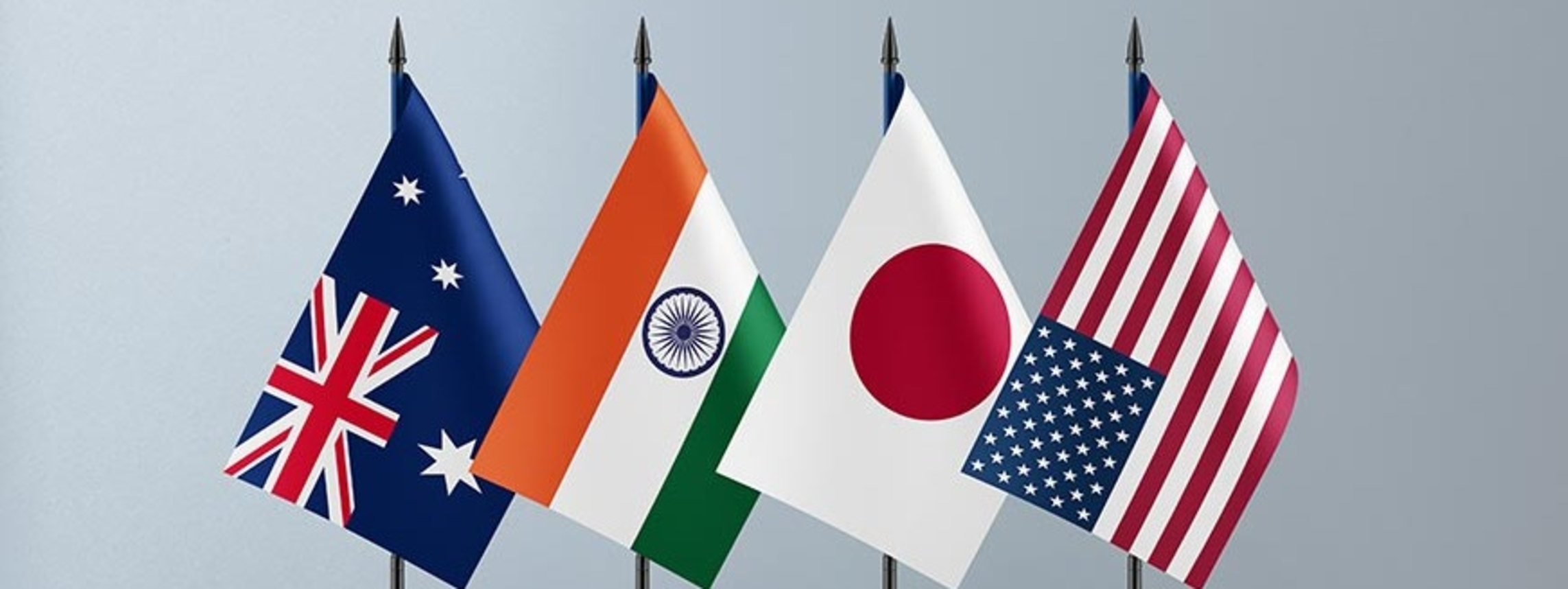
Is the semi-institutionalised format of the QUAD making it less efficient?
The Quadrilateral Security Dialogue (QUAD) was conceived in the aftermath of the 2004 Tsunami and was later formally put into place in 2007, led by the late Shinzo Abe, to strengthen his vision to reimagine a new region—the Indo-Pacific. However, the reluctance of member states to form a group that could be perceived as an anti-China alliance, as well as aggressive campaigning by China, led to the debacle of Australia pulling out of the arrangement in 2008. The increasing belligerence of China and the changed geopolitical scenario with concepts such as the Free and Open Indo-Pacific(FOIP) and rule-based order gaining traction assisted in the rebirth of QUAD in 2017. However, learning from the past, the grouping rebranded itself as one which favours the Indo-Pacific region’s sustainable development, stability, and prosperity by delivering tangible benefits to its people. It acted in support of actions that respected the present rule-based order and strengthened existing regional institutions. To the countries of the Indo-Pacific, the renewed QUAD tacitly presented itself as an alternative against growing Chinese influence and hegemony, thereby maintaining stability in the region.