
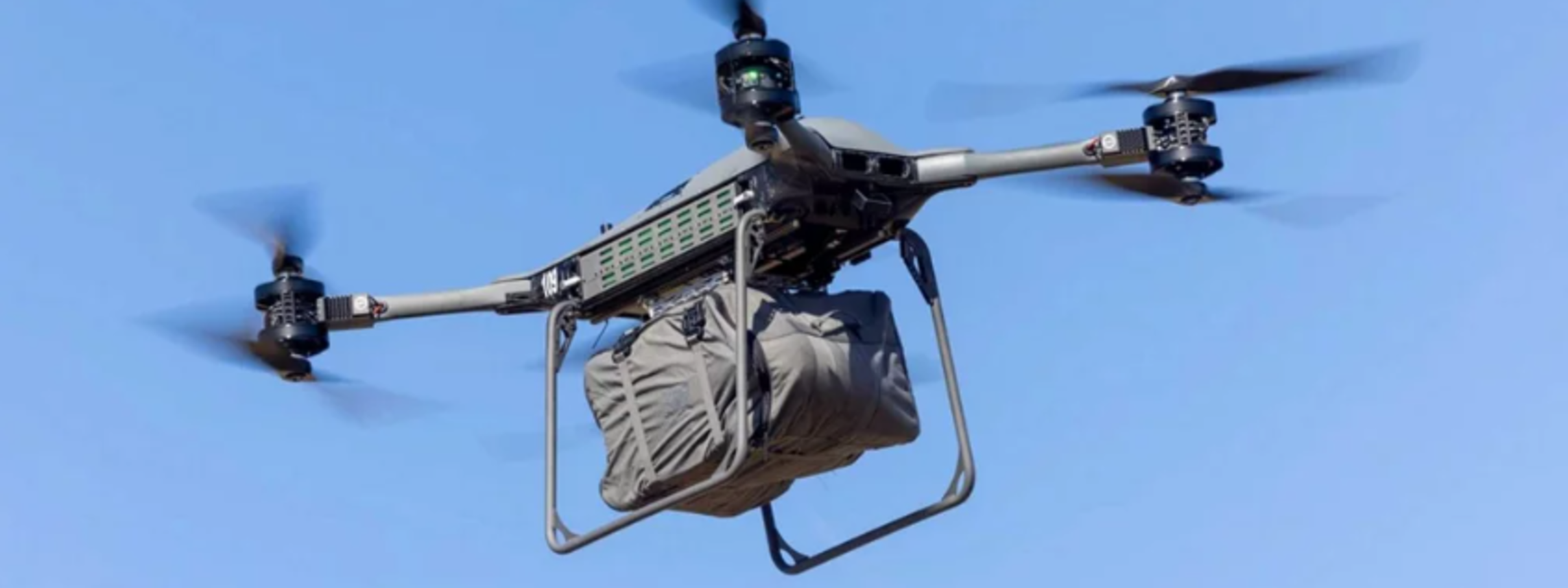
US Marines test British TRV-150 drone for critical medical resupply at Bold Quest 24 exercise
On October 30, 2024, the Combat Logistics Battalion 8 (CLB-8), part of the 2nd US Marine Logistics Group, demonstrated the capabilities of the British-made Tactical Resupply Vehicle 150 (TRV-150) cargo drone during Bold Quest 24. This joint-staff-sponsored multinational exercise, held at Camp Lejeune, North Carolina, aimed to enhance interoperability across air, land, sea, space, and cyber domains. During the exercise, the TRV-150 was employed to deliver 38.5 kilograms of medical supplies, including real blood, under operational conditions.
In April 2023, the U.S. Navy awarded a contract worth $8.4 million to the British company Malloy Aeronautics and its American reseller, Survice Engineering, for 21 units. This decision followed the TRV-150's first-place ranking at the PMA-263 Tactical Resupply UAS Challenge in 2019. On October 27, 2023, the Marine Corps declared Initial Operational Capability (IOC) for the TRV-150C at Marine Corps Base Hawaii, equipping and training the Third Littoral Logistics Battalion (LLB-3) to operate the system. The U.S. Marine Corps plans to deploy the Tactical Resupply Unmanned Aircraft System (TRUAS) across all logistics battalions by 2028, with each unit expected to receive three to six drones.
The development of the TRV-150 traces back to Malloy Aeronautics' earlier work on hoverbike concepts in 2012, which evolved into more practical unmanned cargo delivery systems. The TRV-150C, an electric vertical takeoff and landing (eVTOL) cargo drone, can transport up to 68 kilograms of supplies over a range of 70 kilometers at a cruising speed of 108 kilometers per hour. It has a flight time of 36 minutes and uses waypoint navigation for autonomous mission planning.
The TRV-150 features eight electric motors driving propellers, removable batteries for quick replacement, and modular components, including foldable propeller booms and fixed skid landing gear, for compact storage and ease of transport. It is designed to be deployable by a single individual and operational in diverse weather conditions, including rain, wind, desert, and Arctic environments. The drone can deliver cargo either by landing or via aerial drops.