
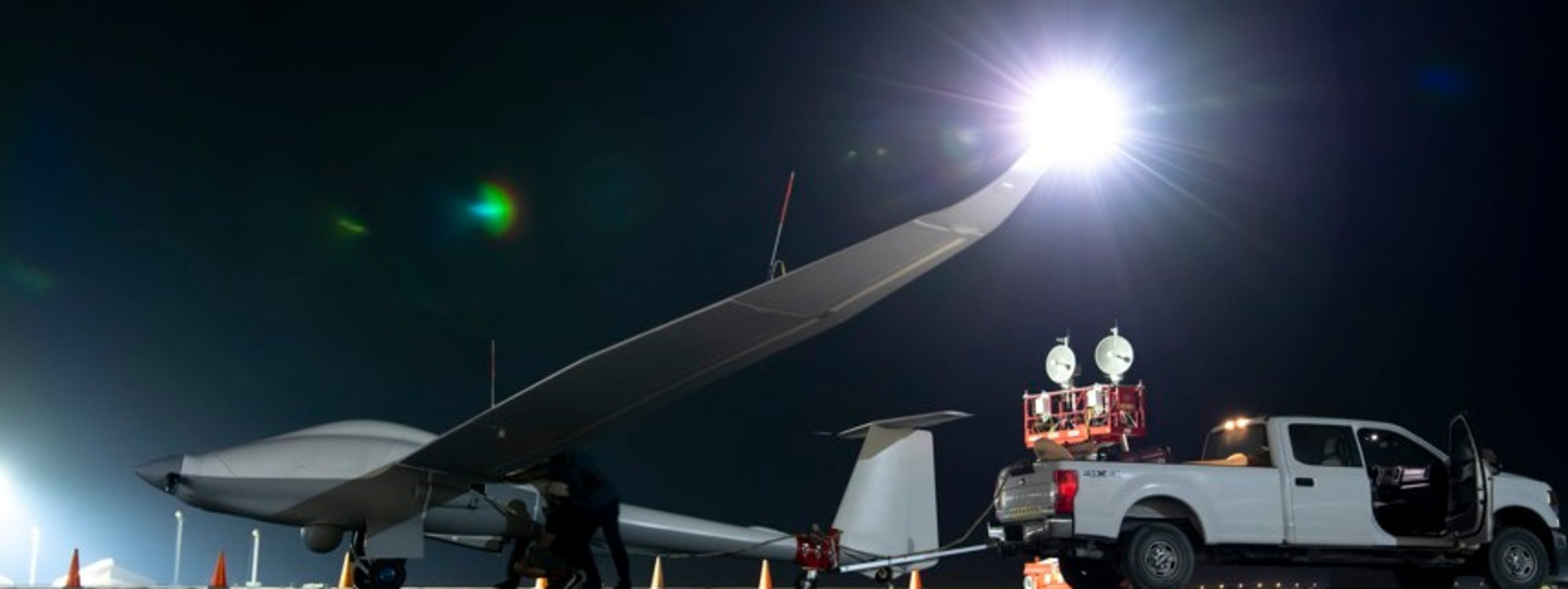
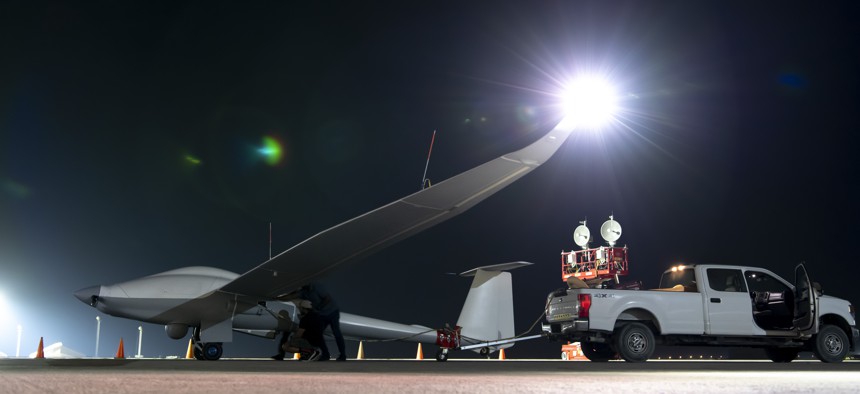
The U.S. Air Force is getting closer to realizing its vision of low-cost surveillance drones with an autonomous drone that can fly for more than three straight days. And it’s already flying missions in the Middle East.
The Ultra Long-Endurance Tactical Reconnaissance Aircraft, or ULTRA, was operating in the shadows until U.S. Central Command in May inadvertently revealed that the drone was deployed in the Middle East by releasing pictures of it at Al Dhafra Air Base in the United Arab Emirates.
Developed by drone maker DZYNE Technologies in conjunction with the Air Force Research Laboratory, the ULTRA promises a “new chapter” for the services as they steer away from expensive, legacy ISR aircraft, the company said. Before the drone photos were released, DZYNE had remained quiet about its long-endurance programs because it was working directly with warfighters on “active missions,” said Matt McCue, CEO of DZYNE.
“The business was brought forth by really working with the end users. We were brought into usually secure, classified environments, they would talk about a need that they couldn't get from industry, and we would put together a program for them and help them solve a problem,” McCue told Defense One.
The Air Force officially started buying ULTRA, which began under the DOD’s small business innovation research program (SBIR), in the 2025 budget request, and asked to buy four drones for $35 million, according to budget documents. The program was developed from DZYNE’s Long Endurance Aircraft Program, or LEAP, McCue said, a previously under wraps autonomous aircraft deployed since 2016 that can fly for up to 40 hours.
The glider-like ULTRA drone can stay in the air for 80 hours without refueling or landing, and can carry payloads weighing up to 400 pounds. ULTRA costs just a fraction of the price of a legacy surveillance aircraft, DZYNE says, such as the General Atomics MQ-9 Reaper, which costs roughly $30 million apiece.