

How to Make Military AI Governance More Robust
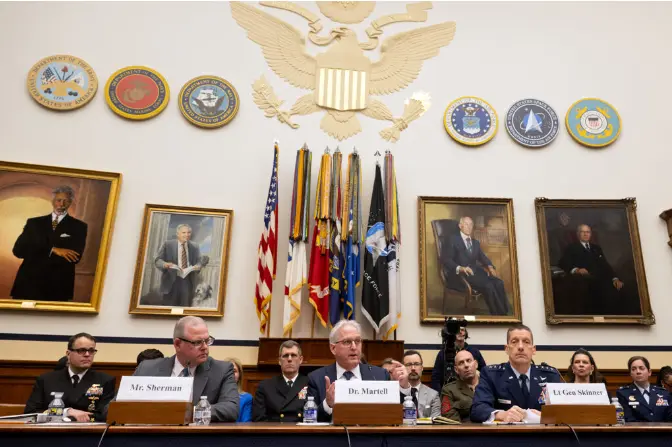
AI-enabled warfare has reached its “Oppenheimer moment.” From the backroom to the battlefield, AI is now being integrated into the full spectrum of military operations, including in logistics, intelligence collection, wargaming, decision-making, target identification, and weapons systems, with increasing levels of autonomy. The Ukrainian military is flying AI-enabled drones; the Israel Defense Forces are relying on AI to accelerate and expand targeting in Gaza; and the Pentagon is using AI to identify targets for airstrikes. The military AI revolution has arrived, and the debate over how it will be governed is heating up.
To navigate this moment responsibly and at responsible speed, policymakers are racing to develop AI governance frameworks even as AI tools are deployed on the battlefield. In the United States, the Biden administration’s executive order on AI directs the U.S. government to prepare a memorandum on military and intelligence uses of this technology area. It is expected to be finalized soon. The Trump campaign has vowed to rescind that order and is reportedly planning to launch a series of “Manhattan Projects” to roll back “burdensome regulations.” On the international stage, the United States is working with like-minded countries to expand the first-ever international agreement on military use of AI — a non-legally binding declaration — ahead of the second Summit on Responsible Artificial Intelligence in the Military Domain in September.
As AI pervades the battlespace, it is time to implement policies and forge consensus around how it will be governed. And while policy debates finally have moved beyond lethal autonomous weapons systems, governance frameworks still suffer from a narrow focus on military operations and international humanitarian law, leaving critical gaps in protection for civilians. Building on the international agreement, policymakers have a rapidly closing window of opportunity to address these problems and ensure that military AI is truly safe — on and off the battlefield.