
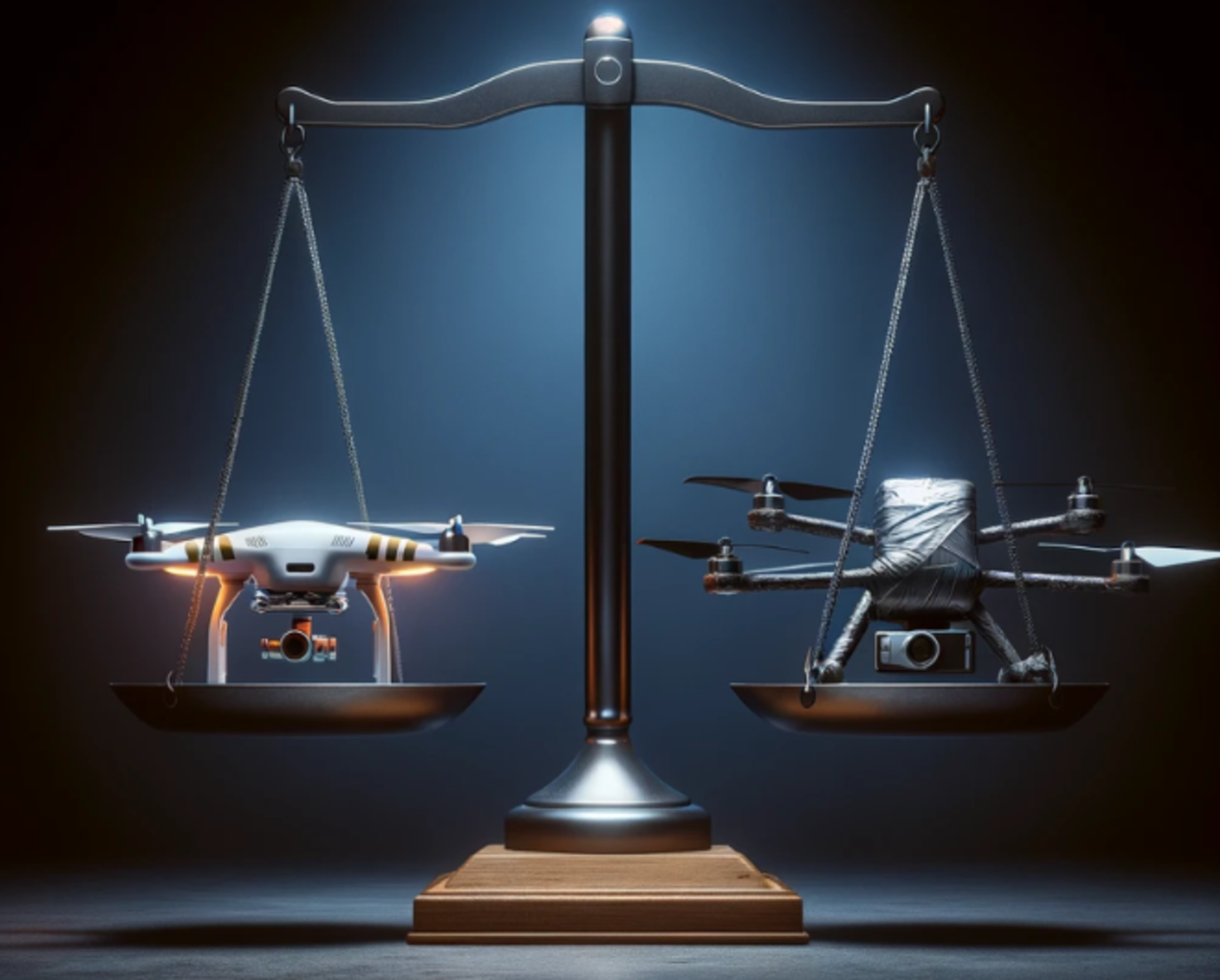
From Sling and Stone to Autonomous Drone? Key Questions for Determining Whether Autonomy Favors Davids or Goliaths
Suppose that the year is 2035 and America is engaged in counterinsurgency operations in the Middle East: would autonomous drones favor the insurgents or counterinsurgents? Scholars such as T.X. Hammes, Paul Scharre, and Sarah Kreps have argued that autonomous military systems (AMS) will tend to favor conventionally “weaker” or poorer actors, including insurgents or terrorists. Rather than framing the question purely in terms of “offense vs. defense”—which can be hard to delineate when territorial control is ambiguous and combatants employ irregular tactics (e.g., ambushes)—these scholars point to asymmetries in target identification challenges and moral restraints, the potential for swarms to overwhelm quality with quantity, and the benefits of cheaper destructive capabilities for poorer actors. These arguments may seem facially convincing and likely do have some merit. However, one can also make facially compelling arguments for why AMS could benefit counterinsurgents or wealthier militaries: they may allow rich, casualty-averse governments to deploy fewer troops abroad, conduct widespread surveillance of conflict zones, reduce collateral damage among civilians, or otherwise better leverage their economic advantages. Additionally, the pace and impact of technology developments are often hard to predict with high confidence, as illustrated by numerous inaccurate predictions or surprises over the past 150 years regarding torpedo boats, machine guns, cavalry, strategic bombing, nuclear weapons, and more.
Read Full Article